Toltec Wisdom Podcasts
Explore in-depth discussions on Toltec sorcery, consciousness, dreaming, perception, personal power, and the teachings associated with Carlos Castaneda.
Autobiography of a Sorcerer
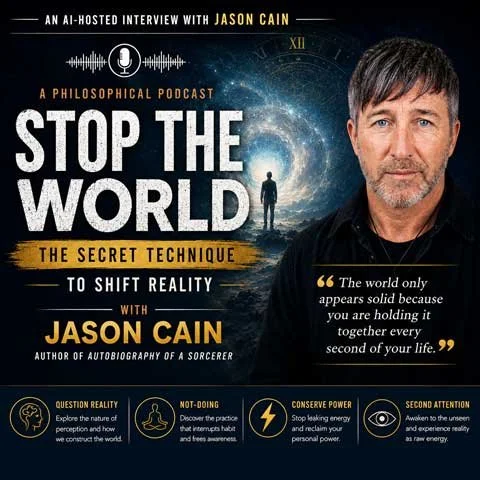
What if the world appears fixed only because we continually reinforce it through habit, internal dialogue, and conditioned perception?
In this AI-hosted interview, author Jason Cain explores the Toltec practice of Not-Doing—a method for interrupting habitual perception, conserving personal power, silencing internal dialogue, and loosening the grip of the First Attention. The conversation examines how Not-Doing can help “stop the world,” make perception more fluid, and open awareness toward what Toltec sorcery calls the Second Attention.
The episode also explores parallels between Toltec sorcery, Zen, Yoga and non-dual philosophy, asking a radical question: Can awareness exist beyond the identity we normally call “self”?
What if enlightenment is not about becoming a better version of yourself, but about transcending the identity you believe yourself to be?
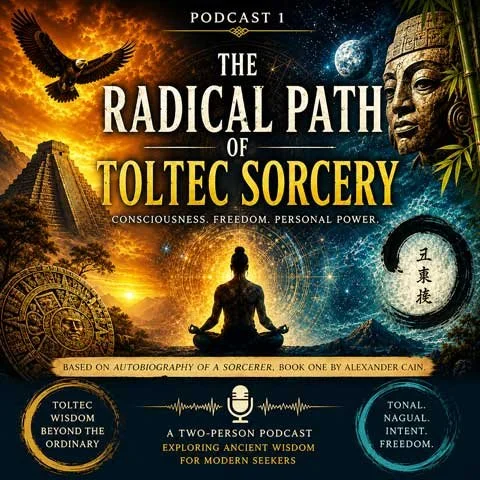
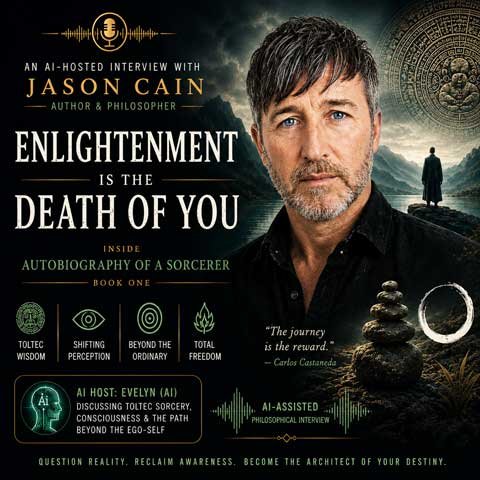
In this AI-hosted philosophical interview, author Jason Cain explores the central ideas behind Autobiography of a Sorcerer, Book One, examining the radical purpose of Toltec sorcery and its pursuit of freedom from conditioned perception.
The conversation explores the Tonal and Nagual, Self-Importance, Personal Power, the Energy Body, Inner Silence, Not-Doing, the Second and Third Attention, and the psychological dissolution of the ego-self. Cain also examines parallels between Toltec sorcery, Zen, Taoism, yogic philosophy, Samadhi, Hara, chakras, and other traditions concerned with the transformation of consciousness.
Rather than presenting spirituality as comfort or belief, The Radical Path of Toltec Sorcery asks a more confronting question: What remains when the internal dialogue falls silent and the identity you call “you” begins to disappear?
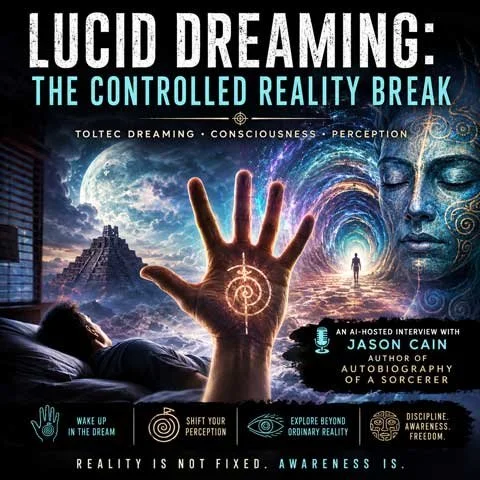
What if lucid dreaming is more than simply becoming conscious inside a dream? In this AI-hosted interview, author Jason Cain explores Toltec dreaming as a disciplined method for shifting perception while maintaining awareness. Drawing from Carlos Castaneda’s The Art of Dreaming and ideas explored in Autobiography of a Sorcerer, the conversation examines the Assemblage Point, Second Attention, the Energy Body, dream stabilization, and the controversial possibility that consciousness may access realities beyond ordinary perception.
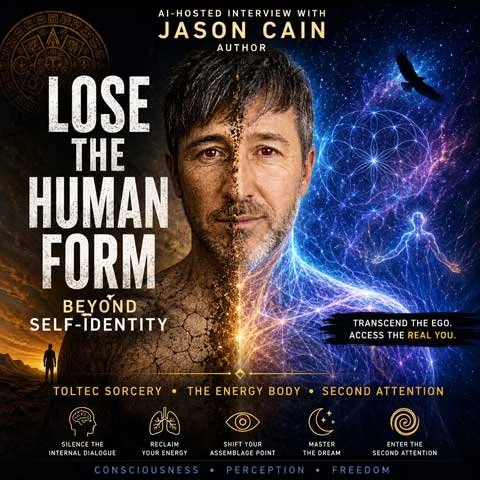
What does it mean to lose the human form? In this AI-hosted philosophical interview, author Jason Cain explores the Toltec idea that our ordinary identity may be only one configuration of awareness. The conversation examines internal dialogue, self-importance, recapitulation, stalking, the Energy Body, and the Second Attention—and asks what might remain when we stop continually telling ourselves who we are.
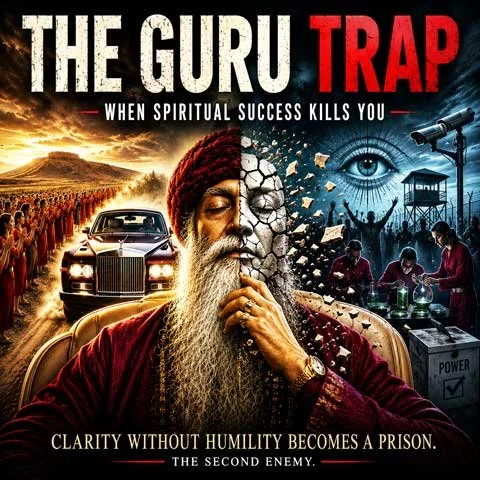
What happens when a spiritual master stops questioning themselves? The Guru Trap: When Spiritual Success Kills You explores the rise and fall of Bhagwan Shree Rajneesh through the lens of Don Juan’s Second Enemy: Clarity. This podcast examines how genuine spiritual insight can slowly transform into certainty, spiritual narcissism, and ideological blindness when humility disappears. A deep psychological and philosophical breakdown of enlightenment, ego, and the hidden dangers of the spiritual path.
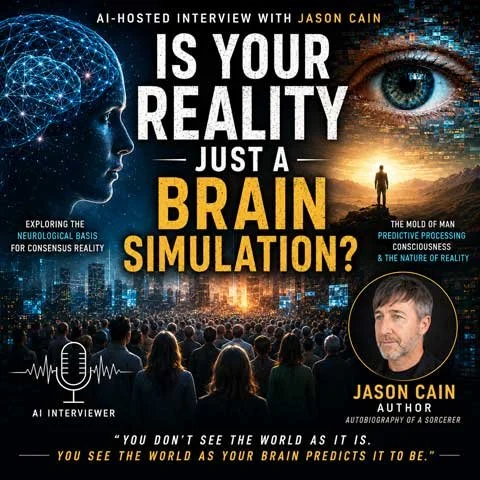
What if the reality you experience is not the world itself, but a model constructed by your brain? In this AI-hosted interview, author Jason Cain explores the Toltec concept of the Mold of Man alongside modern theories of predictive processing and consciousness. From consensus reality and the Tonal to Stopping the World and artificial intelligence, the discussion asks whether human beings perceive reality as it truly is—or only the version our minds have learned to construct.
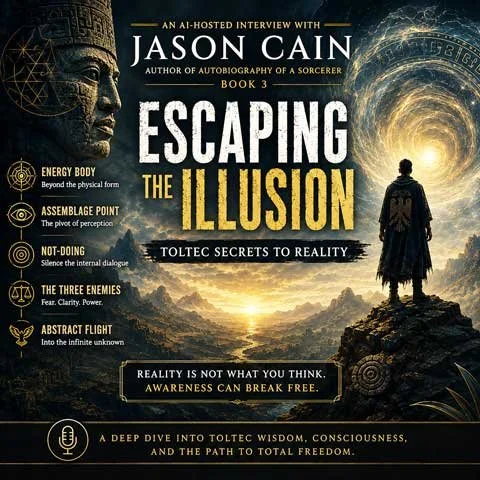
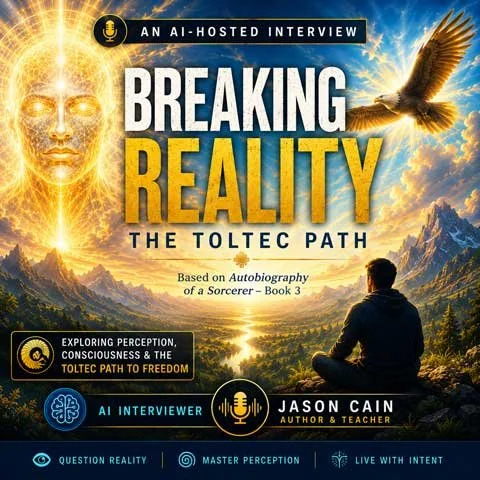
What if reality is not as fixed as it appears? In this AI-hosted interview, author Jason Cain explores the deeper teachings of Autobiography of a Sorcerer: Book 3, examining the Toltec concepts of the Energy Body, Assemblage Point, Losing the Human Form, Inner Silence, Seeing, Intent, and the Second Attention.
The conversation also explores the hidden dangers encountered on the sorcerer’s path—Fear, Clarity, Power, and Death—and asks whether breaking our habitual patterns of perception can reveal a reality beyond the ordinary human world.
At its heart, Escaping the Illusion is an exploration of consciousness, perception, spiritual transformation, and the Toltec pursuit of Total Freedom.
Enlightenment Is the Death of You is an AI-hosted philosophical interview with author Jason Cain exploring the radical path of Toltec sorcery, Zen, Taoism, and consciousness transformation. Moving beyond modern self-help spirituality, the episode examines ego dissolution, internal silence, conditioned perception, and the unsettling idea that true enlightenment may require the psychological death of the self we believe we are.
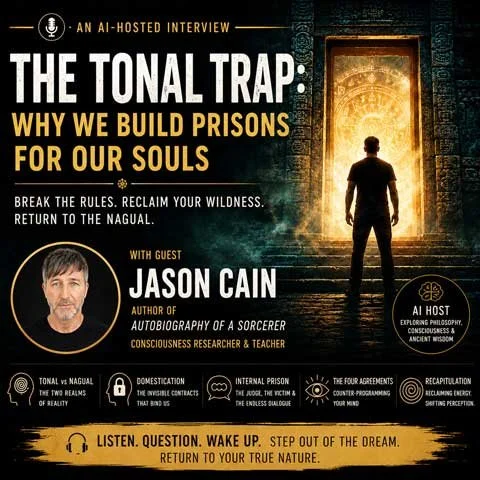
An AI-hosted philosophical interview with Jason Cain exploring are we truly free, or have we been psychologically domesticated by society? In this AI-hosted interview, Jason Cain explores Toltec concepts including the Tonal, the Nagual, internal dialogue, recapitulation, and the hidden agreements that shape human identity. Discover how Toltec warriors sought to break free from conditioning and reclaim authentic awareness.
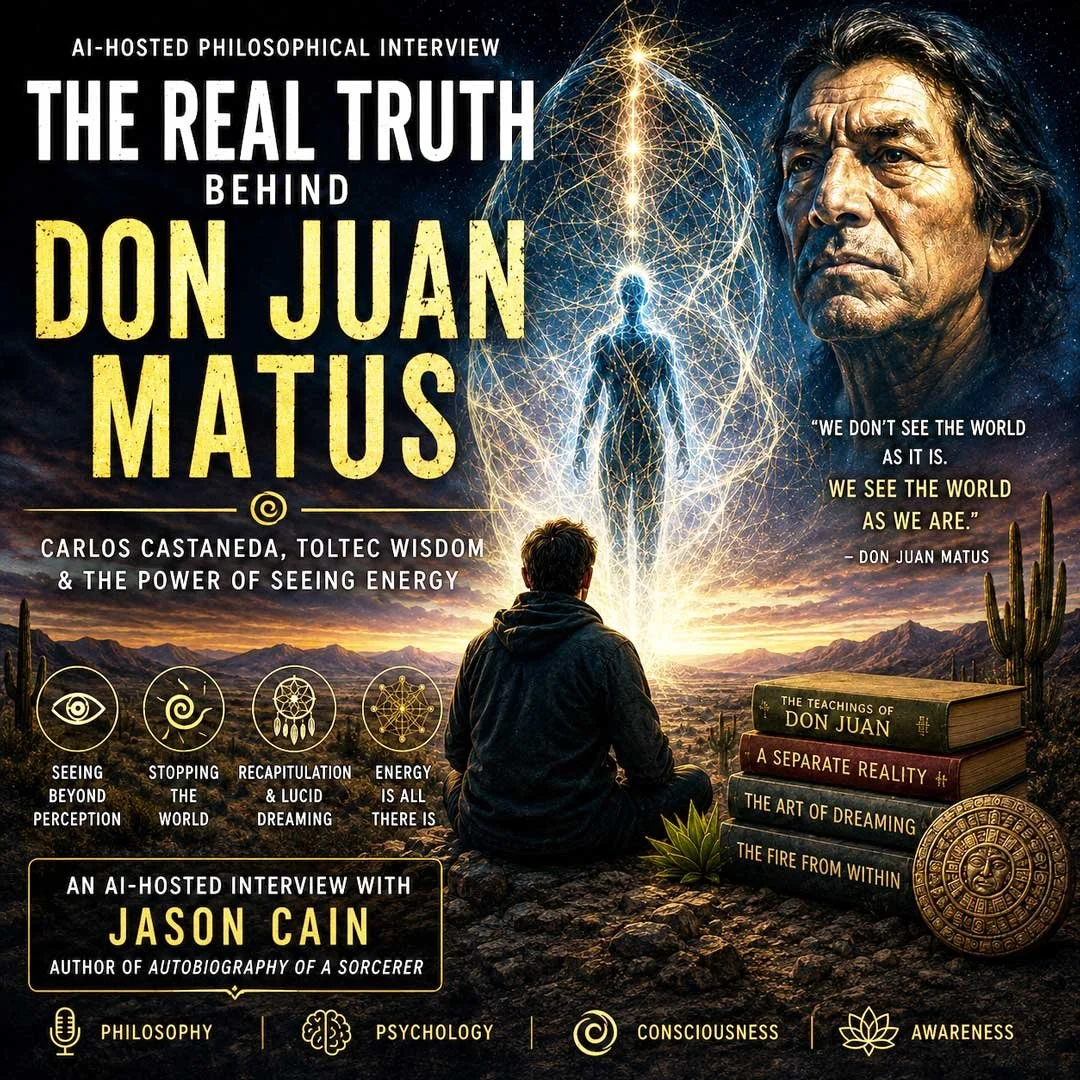
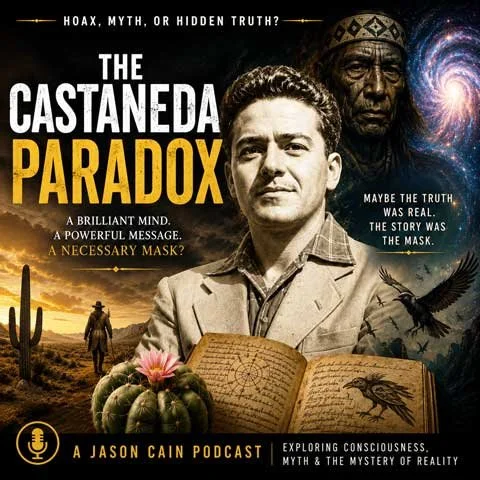
A deep exploration into the truth behind Don Juan Matus, Carlos Castaneda, and the origins of modern Toltec philosophy. In this AI-hosted interview, Jason Cain examines the controversy surrounding Castaneda’s legacy, the meaning of “seeing” energy, and why these teachings continue to influence seekers despite accusations of fiction, synthesis, and plastic shamanism. Bridging Toltec wisdom, Zen, psychology, and consciousness studies, this episode explores whether the real power of these teachings lies not in mythology itself, but in their ability to transform human perception and challenge the structure of reality as we know it.
A provocative exploration of Carlos Castaneda and the mystery of Don Juan Matus — not as a simple fraud, but as a brilliant and deeply charismatic figure who may have intentionally blurred truth and fiction to communicate spiritual ideas modern society had become blind to. This episode examines mythology, perception, ego, and the possibility that hidden truths sometimes require masks, symbols, and mystery to penetrate a world trapped in rationalism and self-importance.
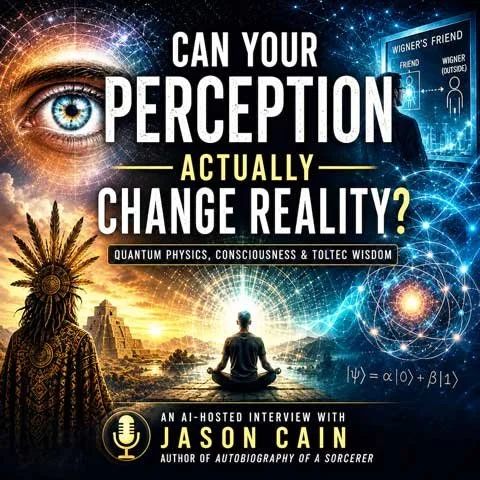
Does reality exist independently of observation?
From quantum mechanics to Toltec sorcery, Jason Cain explores the controversial idea that consciousness may actively participate in shaping reality. Featuring discussions on Wigner’s Friend, the observer effect, and participatory universe theory.What if the highest form of mastery was not forcing reality… but becoming empty enough for reality to move through you?
What if reality is only a fragile interpretation of something far deeper? In this AI-hosted interview, Jason Cain explores the Toltec path of breaking perception itself through Inner Silence, Not-Doing, Dreaming, and the movement into the Second Attention. From the dangers of Clarity and spiritual Power to the terrifying beauty of Eternity’s Kiss, this episode journeys into altered states of consciousness, the collapse of self, and humanity’s confrontation with the infinite.
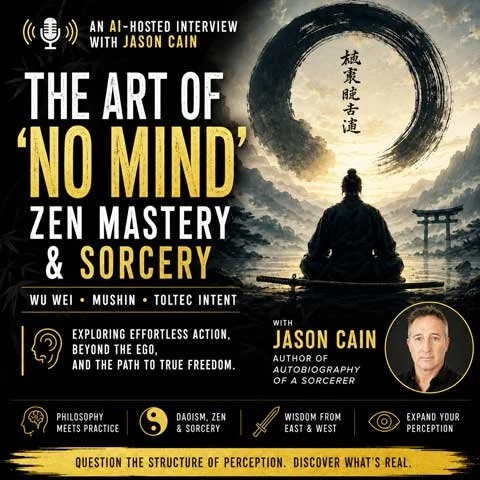
An AI-hosted philosophical interview with Jason Cain exploring the hidden connection between Daoist Wu Wei, Zen Mushin, and Toltec Intent. Drawing from Autobiography of a Sorcerer, the episode examines Inner Silence, the Mood of the Warrior, and how freedom emerges when awareness stops clinging to fear, self-identity, and internal dialogue.
What if the person you believe yourself to be is only a temporary construction of perception? In this AI-hosted interview, author Jason Cain explores the Toltec concept of Losing the Human Form and the possibility of moving beyond the fixed identity of the ego-self. Drawing from Autobiography of a Sorcerer, the discussion examines the Assemblage Point, Inner Silence, Not-Doing, the Second Attention, the Place of No-Pity, and the Third Attention.
The episode also explores parallels between Toltec sorcery, Zen, Yoga and non-dual philosophy, asking a radical question: Can awareness exist beyond the identity we normally call “self”?